Smart Home Devices That Are Actually Worth Buying
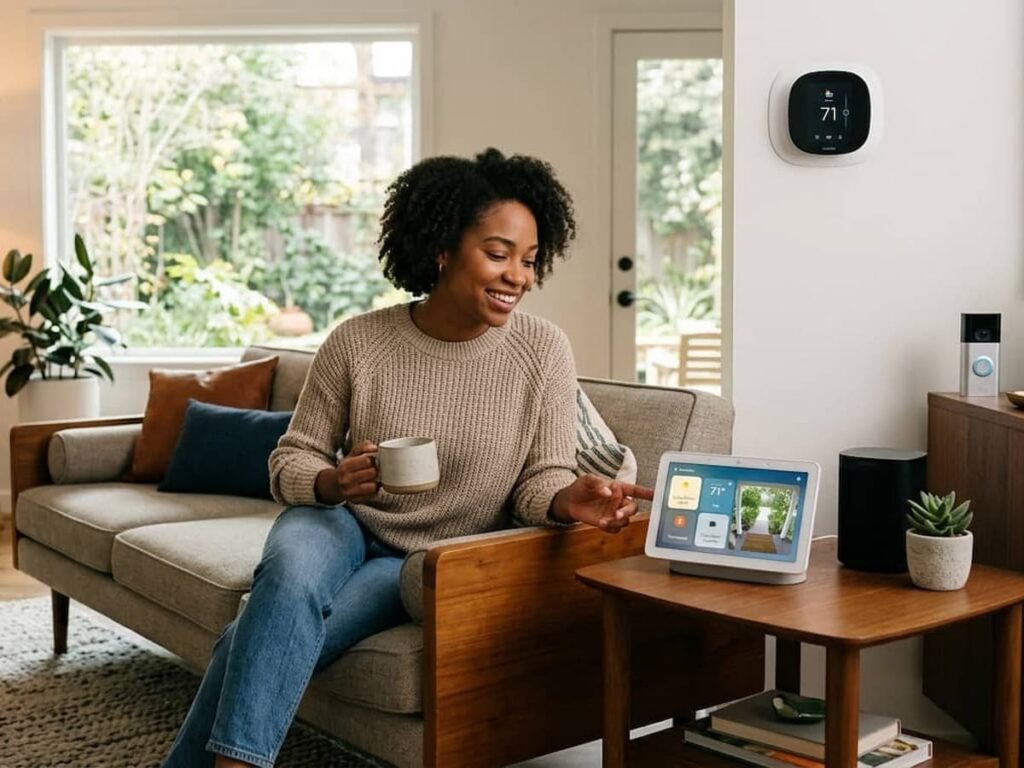

We have all been there. You buy a highly rated smart gadget, spend two hours trying to connect it to your Wi-Fi, and three weeks later, you realize it is completely useless. Do you really need a refrigerator that texts you when the milk is low? Or a Bluetooth-enabled toaster? Probably not. The early days of home automation were filled with these over-engineered novelties that complicated your life instead of simplifying it.
But things have changed. Today, the smart home market is massive, valued at over $33 billion in the U.S. alone.² In fact, household penetration is projected to hit 89.5 percent.¹ This means almost everyone is using some form of connected tech.
So how do you separate the life-changing upgrades from the electronic waste? It comes down to three basic criteria: reliability, utility, and genuine convenience. A device is only worth buying if it solves a real problem, saves you money, or saves you time. Let us look at the ones that actually deliver on that promise.
The Foundation Smart Thermostats and Climate Control
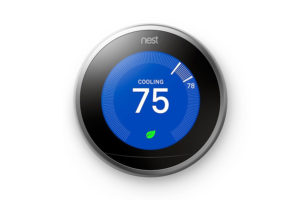
If you want to start making your home smarter, the thermostat is the absolute best place to begin. Why? Because heating and cooling make up over half of the average home’s energy bill. A smart thermostat is one of the very few gadgets that will actually pay you back.
These devices work by learning your daily routine and using geofencing to figure out when you are away. Instead of blasting the air conditioning in an empty house, the system dials things back. Once you head home, it warms or cools the rooms to your preferred temperature. Most homeowners save between 10 and 15 percent on their utility bills, meaning the device pays for itself in just a year or two.
When looking at the top options, two stand out for their “set it and forget it” convenience:
• Ecobee Smart Thermostat Premium: This is widely considered the best overall option. It has built-in air quality monitoring and uses remote sensors to balance out hot and cold spots in different rooms.
• Google Nest Learning Thermostat (Gen 4): This model has a beautiful borderless design and uses advanced learning algorithms to build a schedule for you without any manual programming.
Security That Does Not Require a PhD
Home security is another area where smart tech offers immediate, practical value. You do not need a complicated, expensive security contract to protect your home anymore. Instead, a few well-placed devices can give you complete peace of mind.
Porch piracy is a major headache. Recent surveys show that 71 percent of U.S. adults are actively taking steps to prevent package theft.³ That explains why video doorbells are so popular.
But what about keyless entry? Smart locks remove the friction of physical keys. You can grant temporary access codes to guests or dog walkers, and you will never have to worry if you forgot to lock the door on your way to work.
Of course, there is always a trade-off between convenience and privacy. If you are worried about cloud security, look for devices that offer local storage. This keeps your video footage inside your home instead of sending it to a corporate server.
Here are the most reliable options on the market:
• Google Nest Doorbell (Wired, 3rd Gen): This doorbell offers sharp resolution and smart on-device detection for packages and people. It even gives you three hours of free rolling video history without forcing you into a monthly subscription.
• Level Lock Pro: If you hate the look of bulky smart locks, this is the one to get. The smart technology is hidden entirely inside the door deadbolt, letting you keep your beautiful, traditional exterior hardware.
• Yale Assure Lock 2: A highly customizable option that lets you choose between keypads, fingerprint scanners, and interchangeable communication modules.
• Wyze Lock Bolt v2: An incredibly budget-friendly option under $100 that features a fast fingerprint scanner and local-only control for extra privacy.
Smart Lighting: Beyond the Novelty
Changing the color of your living room to hot pink is a fun party trick, but it is not why you should buy smart bulbs. The real value of smart lighting lies in automation, convenience, and energy savings.
Switching to LED lighting can save the average household up to $225 a year. Adding smart control takes those savings a step further. You can set schedules so lights never stay on in empty rooms, or use vacation modes that mimic your normal daily routine while you are away to deter intruders.
There is also the benefit of circadian lighting. You can program your lights to slowly mimic the sun, starting with cool, bright light in the morning to wake you up, and transitioning to warm, dim tones in the evening to help you wind down.
When shopping, focus on these top picks:
• Philips Hue System: This is the gold standard for color quality and reliability. It is incredibly stable and plays nicely with every major smart platform.
• Wiz Smart Bulbs: A fantastic budget alternative that connects directly to your Wi-Fi without needing a separate hub. They feature SpaceSense technology, which uses disruptions in your Wi-Fi signals to detect motion. This means your bulbs act as motion sensors without you needing to buy any extra hardware.
Practical Gadgets for the Kitchen and Beyond
Some of the most valuable smart home tools are the smallest. Smart plugs and sensors do not get much attention, but they solve real-world problems.
Take smart plugs, like. For a small investment, you can turn any traditional appliance, like a fan, a coffee maker, or holiday lights, into a connected device. You can set schedules or turn them off remotely when you realize you left the house with the curling iron still plugged in. They are also great for cutting down on “phantom energy drain” from electronics that suck power even when turned off.
Water leak sensors are another unsung hero. Placing a cheap sensor under your kitchen sink or next to your washing machine can alert you to a leak before it turns into a multi-thousand-dollar water damage disaster.
Here are the top high-utility gadgets to consider:
• Kasa Smart Plug Mini: This is the top choice for reliability and compact design, as it will not block your second wall outlet.
• Emporia Smart Plug: This plug tracks exact energy use. You can use it to schedule power-hungry appliances to run only during off-peak hours when electricity is cheaper.
Building an Ecosystem That Lasts
The biggest headache in smart home history has always been compatibility. Will this bulb work with my phone? Can my smart speaker control my lock?
Fortunately, the industry has finally started working together. The rollout of Matter and Thread has changed the game. Matter is an open-source standard backed by Apple, Google, Amazon, and Samsung. It makes sure that any Matter-certified device will work seamlessly across different platforms.
Meanwhile, Thread is the low-power mesh network that Matter runs on. Instead of crowding your home router, Thread devices talk directly to each other to extend range and reliability. The late 2025 release of Matter 1.4 brought even better tools for managing these networks, making sure your devices stay connected.
If you are just getting started, the best advice is to start small. Do not try to automate your entire house in one weekend. Grab a smart plug or a thermostat first. Figure out what works for your daily routine, and build out from there. By focusing on utility over novelty, you will end up with a home that is genuinely easier to live in.
Sources:
1. Strategic Market Research
https://www.strategicmarketresearch.com/blogs/smart-home-statistics
2. Fortune Business Insights
https://www.fortunebusinessinsights.com/u-s-smart-home-market-107731
3. CNET
https://www.cnet.com/home/smart-home/bought-smart-home-devices-with-these-3-tips-and-made-my-home-smarter/